Explore the sections in this article
A battery stores chemistry, not electricity
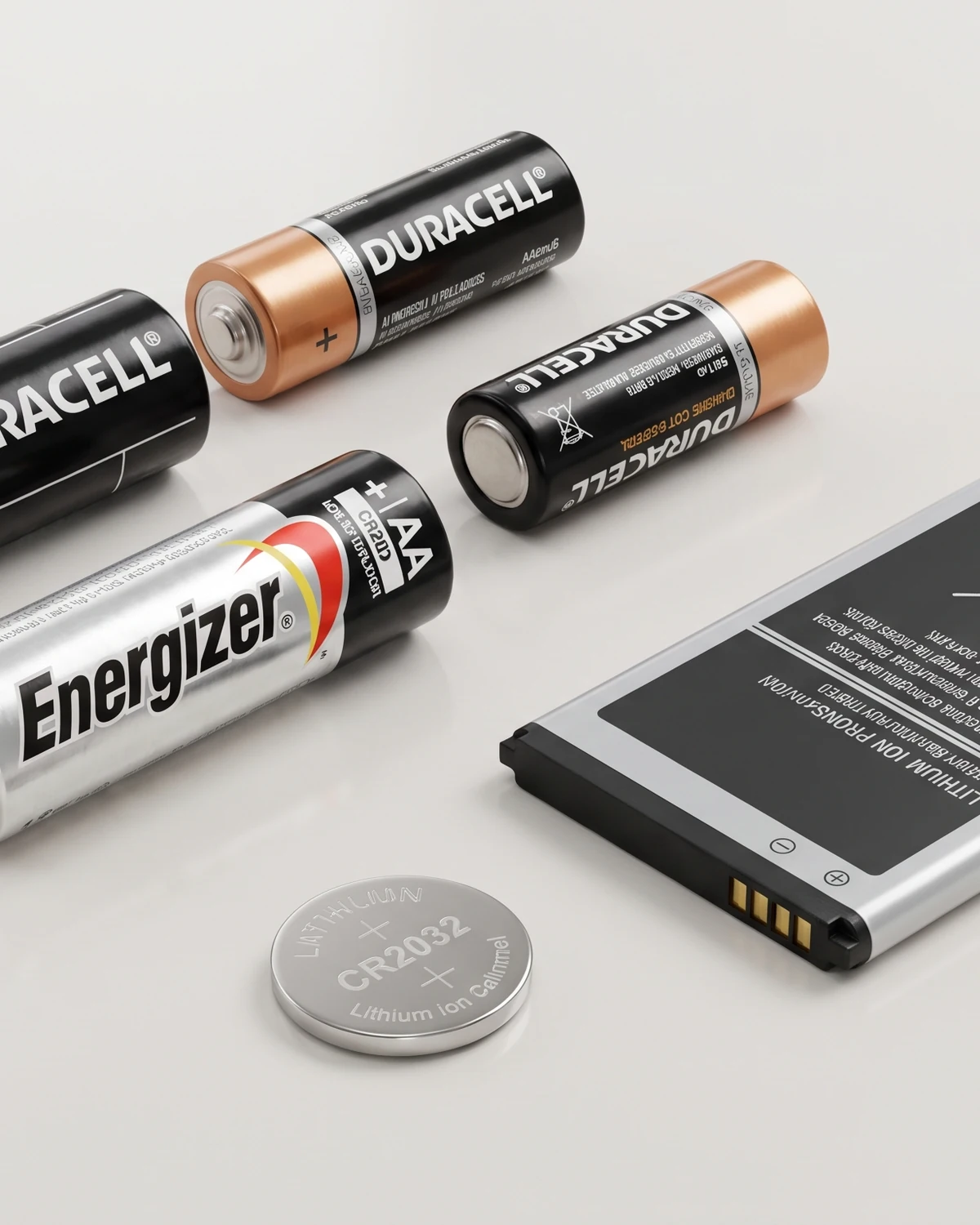
The most surprising fact about a battery is that it does not actually contain a supply of electricity waiting to pour out. What it holds is chemical energy — energy locked in the arrangement of atoms in certain materials, ready to be released by a reaction. The battery's clever trick is to run that reaction in a way that forces the released energy to come out as an electric current rather than simply as heat.
Every battery has three essential parts. There are two electrodes made of different materials: the negative one, called the anode, and the positive one, the cathode. Between them sits the electrolyte, a paste or liquid that lets electrically charged atoms move through it. The whole design exists to set up a chemical reaction that wants to happen but can only proceed if electrons are allowed to travel the long way round — through whatever you have plugged in.
Key fact
A battery doesn't store electricity. It stores chemical energy in its materials and converts it into an electric current only when a circuit is connected.
Pushing electrons the long way round
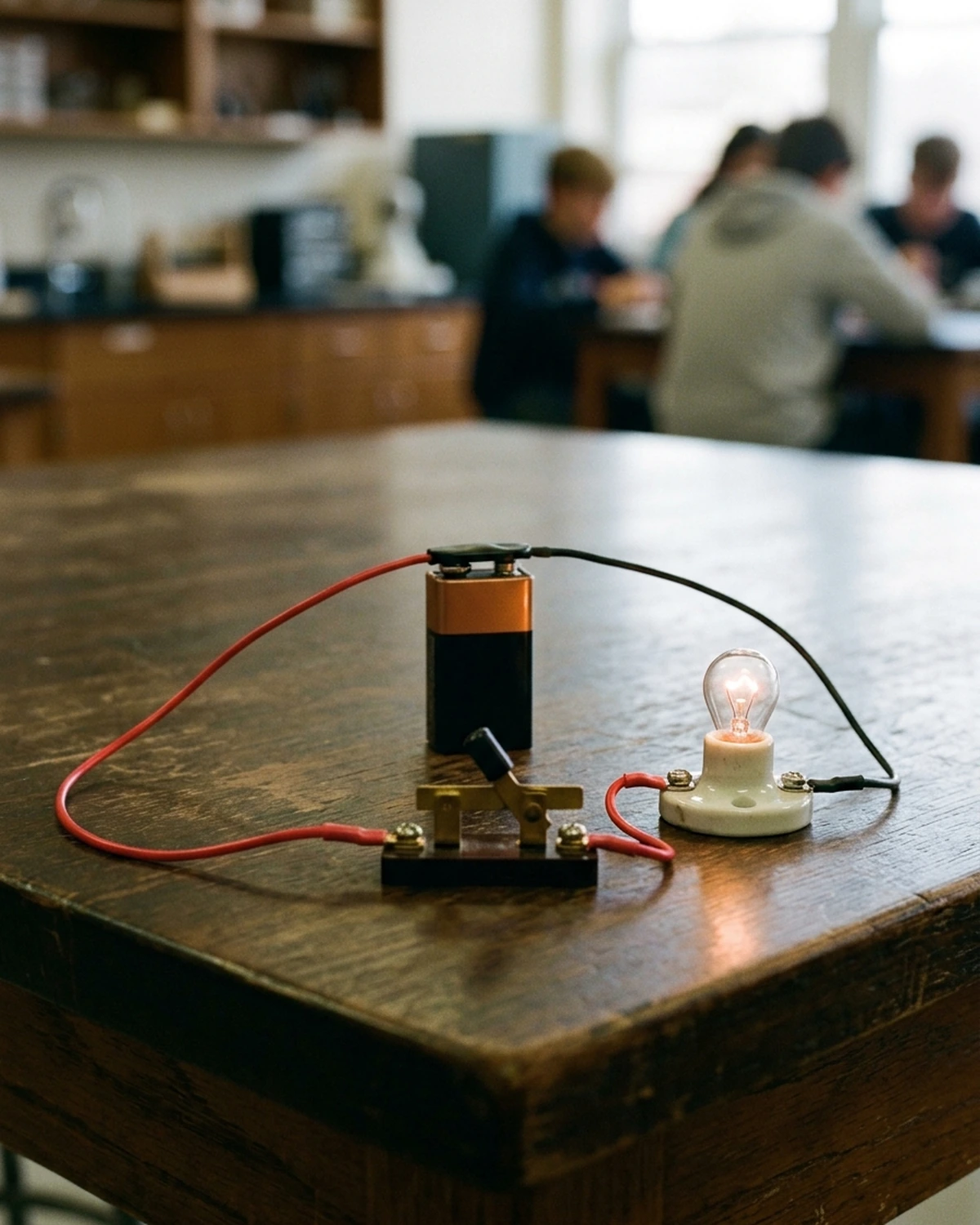
When you connect a battery into a circuit — slotting it into a torch, say — you complete a loop. Now the chemical reaction can begin. At the anode, the reaction releases electrons, giving that electrode a build-up of negative charge. At the cathode, the chemistry is hungry for electrons. The electrons would love to jump straight across to the cathode, but the electrolyte in between blocks their path.
So they are forced to take the only route available: out of the battery's negative terminal, through the wires and the device, and back in at the positive terminal. That stream of electrons flowing through your torch is the electric current, and it is what lights the bulb or turns the motor. Meanwhile, inside the battery, electrically charged atoms called ions drift through the electrolyte to keep the whole process balanced, completing the loop internally.
The instant you break the circuit — switch the torch off — the electrons have nowhere to go, so the reaction essentially pauses. This is why a battery in a drawer holds its charge for a long time: with no complete circuit, the energy-releasing reaction has no way to proceed.
Connect the circuit
Placing the battery in a device completes a loop from one terminal to the other.
Reaction frees electrons
Chemistry at the anode releases electrons; the cathode is ready to accept them.
Electrons flow through the device
Blocked by the electrolyte, electrons travel out through your device — that flow is the current.
Ions balance it inside
Charged atoms move through the electrolyte to complete the loop and keep the reaction going.
Voltage, capacity and why they differ
Two numbers describe most batteries, and the chemistry explains both. Voltage — the 1.5 volts of an AA cell, for instance — is set by which materials the electrodes are made of. Different chemical pairings release their electrons with more or less push, and that push is the voltage. It is a property of the recipe, not the size, which is why a tiny 1.5-volt button cell and a large 1.5-volt AA share the same voltage.
Capacity, on the other hand, is about how much of the reacting material is packed inside. A bigger battery holds more of the active chemicals, so its reaction can run for longer before everything is used up. That is why the large AA outlasts the little button cell even though both push at 1.5 volts. To get higher voltages, batteries are stacked in series inside a single casing — a 9-volt block, for example, is really six small cells linked end to end.
How rechargeable batteries run backwards
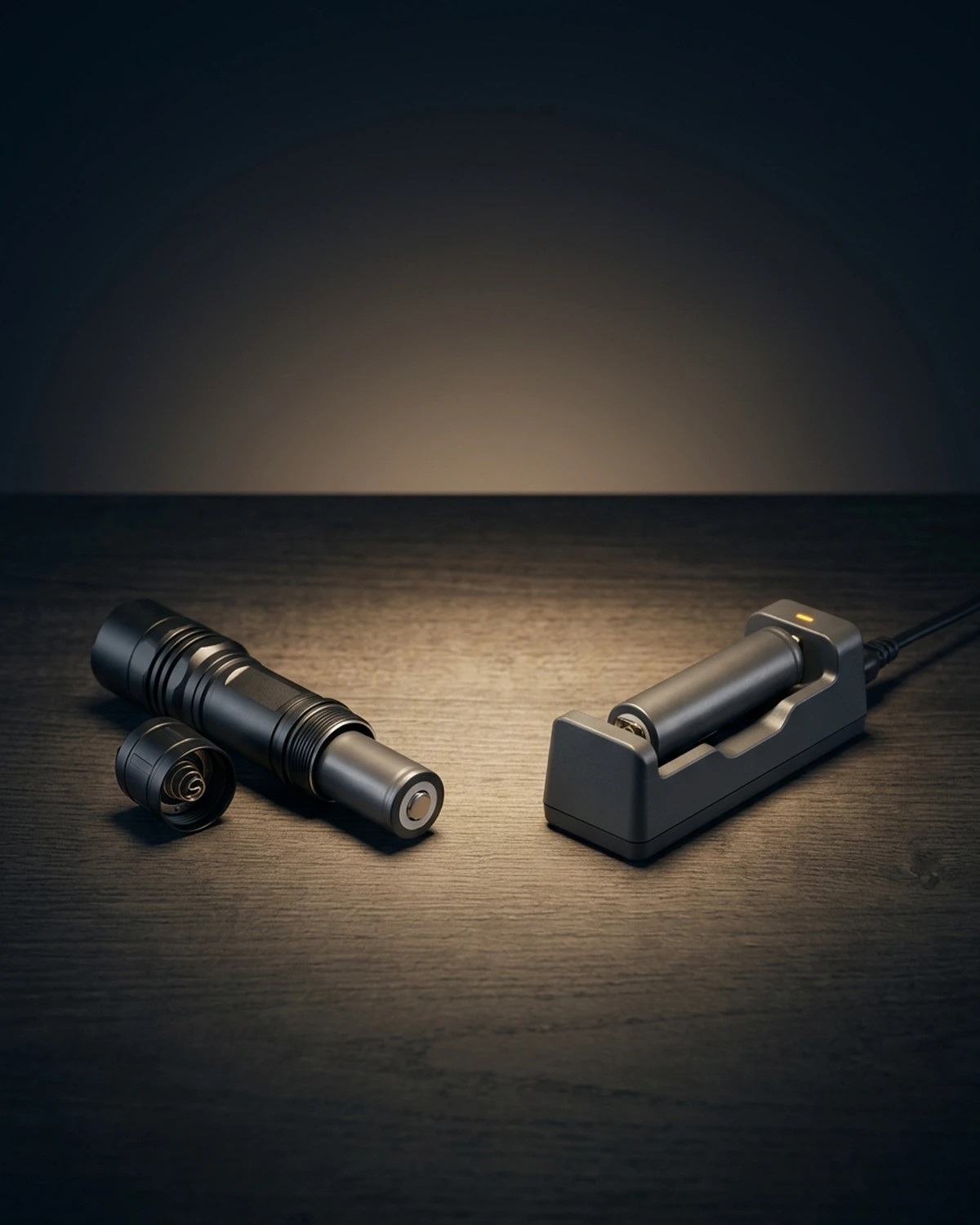
In an ordinary single-use battery, the reaction runs one way until the materials are spent, and then it is finished. A rechargeable battery, like the lithium-ion cell in a phone or laptop, is built so the reaction can be reversed. When you plug in a charger, it forces electricity through the battery in the opposite direction, driving the chemical changes backwards and returning the materials close to their original, energy-rich state, ready to release their energy again.
This reversibility is never perfect. Each cycle causes tiny irreversible changes in the electrodes, which is why a rechargeable battery gradually holds less charge over hundreds of cycles and eventually needs replacing. It also explains why charging generates some heat and why fast charging, which pushes the reaction hard, can shorten a battery's life. The underlying idea, though, is elegant: charging is simply the discharge reaction run in reverse.
The myth of stored electrons
A common mental picture is that a battery is a little tank of electricity — a reservoir of electrons that drains out as you use it, like water from a bottle. It is an intuitive image, but it gets the physics wrong. The electrons that flow through your device are not being poured out of a stored supply; they are being pushed around a circuit by an ongoing chemical reaction, and just as many flow back into the battery as flow out.
What actually depletes is the chemistry. Each moment the battery works, a little more of the reacting material is converted, and when it is exhausted the reaction can no longer push electrons and the battery goes flat. So a dead battery is not empty of electrons at all — it still contains every electron it started with. What it has run out of is the chemical arrangement that was able to drive those electrons around the loop.
✗ The myth
A battery stores electricity that drains out as you use it
A battery is imagined as a tank of electrons that empties like water until it runs dry.
✓ The evidence
It stores chemistry, not a charge
The electrons flow in a loop — as many return to the battery as leave it, so none are used up. What depletes is the chemical material that pushes them. A flat battery still holds all its electrons; it has simply run out of usable chemistry.
Key takeaways
- A battery stores chemical energy, not electricity, and converts it to current only when a circuit is connected.
- It has two electrodes — anode and cathode — separated by an electrolyte that ions can move through but electrons cannot.
- The chemical reaction forces electrons to flow out through your device and back, and that flow is the electric current.
- Voltage is set by the electrode materials, while capacity depends on how much reacting material is inside.
- Rechargeable batteries reverse the reaction when charged, but small irreversible changes shorten their life over many cycles.
- A battery does not store or run out of electrons; a flat battery has simply exhausted its usable chemistry.
Explore the idea
Try it: turn stored energy into running time
Compare a battery's energy rating with a device's average power demand. Doubling the power demand halves the ideal running time.
Ideal running time in hours = energy in watt-hours ÷ average power in watts.
Real running time is shorter when conversion losses, temperature, ageing or reserve capacity reduce usable energy. This is an educational energy budget, not a product guarantee or charging guide.
Model background: U.S. EIA: watts and watt-hours
Frequently asked questions
Does a battery run out of electrons?
No. The electrons flow in a complete loop, so just as many return to the battery as leave it. What runs out is the chemical material that drives them around. A flat battery still holds all its electrons — it has only used up its usable chemistry.
Why do different batteries have different voltages?
Voltage is set by which materials the electrodes are made of, because different chemical pairings push electrons with more or less force. Size does not change voltage, which is why a small button cell and a large AA of the same type both give 1.5 volts.
How do rechargeable batteries work?
A charger forces electricity through the battery in the reverse direction, driving the chemical reaction backwards and restoring the materials to their energy-rich state. The process is not perfectly reversible, so capacity slowly fades over many cycles.
Why do batteries go flat even when not used?
Slow internal reactions and tiny leakage gradually consume the chemistry even with no circuit connected, so batteries self-discharge over months or years. A complete circuit greatly speeds this up, which is why a switched-off device preserves charge much longer.
Sources & further reading
This explainer was prepared through desk research using the sources below; established facts are distinguished from open questions in the text.
- U.S. Department of Energy — DOE Explains…Batteries: electrodes, electrolytes, ion flow and rechargeable cells, Energy.gov.
- Encyclopaedia Britannica — Battery (electronics): composition, types and uses.
- MIT School of Engineering — How does a battery work?, Massachusetts Institute of Technology.
- U.S. Department of Energy — Batteries and energy storage basics, Office of Energy Efficiency & Renewable Energy.
- Royal Society of Chemistry — Electrochemical cells, RSC Education practical resources.
11 September 2026 update: added a sourced interactive model and clarified its assumptions. Editorial change log
More Flash Science explainers are being published regularly. Questions or corrections? Email contact@flashscience.org.
Continue exploring
Three questions to read next.
 Technology & EngineeringHow Do Undersea Internet Cables Carry the World’s Data?Read next →
 Technology & EngineeringHow Does a Refrigerator Keep Things Cold?Read next →
 Technology & EngineeringHow Does a Microwave Oven Heat Food?Read next →