Science explained · Life & Chemistry
How Does Soap Remove Grease?
How can one molecule persuade oily dirt to leave a surface with water it normally avoids?
Explore the sections in this article
Oil and water object to the boundary, not to gravity
Water forms an extensive hydrogen-bond network. Hydrocarbon oil cannot replace those interactions favorably. Forcing oil molecules into water causes surrounding water to organize around them; aggregated oil reduces exposed area. The result is phase separation.
Density determines which phase tends to sit above the other, but it does not cause immiscibility. Some liquids denser than water still separate. The molecular free-energy cost of contact is the key.
At a solid greasy surface, water also competes with oil for contact. If water does not wet the substrate or displace the soil, flow alone may slide over the contamination. A cleaner must alter interfacial tensions and sometimes react with or solubilize components.
One molecule carries two chemical loyalties
Traditional soaps are sodium or potassium salts of fatty acids, produced by saponifying fats or oils with alkali under controlled manufacturing conditions. Their hydrocarbon tails associate with oils; their carboxylate heads are charged and hydrated in water.
Synthetic detergents use other head groups and tail structures: sulfates, sulfonates, ethoxylates, betaines and more. In everyday speech they are all called soap, but formulation chemistry and regulation distinguish them.
Anionic surfactants carry negative heads; cationic surfactants positive; nonionic surfactants no formal head charge; amphoteric molecules can change with pH. Their cleaning, skin compatibility, hard-water tolerance, foam and environmental behavior differ. “A hydrophilic head and hydrophobic tail” is the shared architecture, not a claim that all products are interchangeable.
The first job is reaching the soil
Surfactant adsorbs at the water–air, water–oil and water–solid interfaces. By lowering surface and interfacial tension, it can help solution spread and enter small features. Wetting increases actual contact between cleaner and contamination.
Contact angle offers a visible clue but not a complete cleaning score. Roughness, porosity and chemical heterogeneity create hysteresis. A droplet that spreads on clean steel may behave differently on cooked protein or oxidized oil. Temperature changes viscosity and adsorption.
Builders, solvents, chelators and enzymes in formulated cleaners perform additional jobs. Enzymes can cut proteins, starches or fats into more removable fragments. Alkalinity can change fatty soil. No ingredient should be mixed outside label directions; incompatible cleaners can generate hazardous gases or heat.
Agitation creates the interface that surfactant stabilizes
Moving a cloth or water jet applies shear. It lifts, stretches and divides a greasy film. Smaller droplets have much more total surface area for the same oil volume. Creating that area costs energy, which is why plain water struggles.
Surfactant molecules rapidly adsorb to the new interface. Their hydrated or charged heads create steric and electrostatic barriers that reduce coalescence. The result can be an emulsion: droplets of one liquid dispersed in another.
Not every soil becomes a neat spherical droplet inside a textbook micelle. Real mixtures contain liquid oils, waxes, particles, proteins and surfactant aggregates of changing shape. Some oil is solubilized inside micelle-like structures; some remains in larger emulsion droplets; some leaves attached to solid particles.
A calculation: cleaning manufactures enormous boundary
Take 1.0 mL of oil, a volume of 1.0 × 10⁻⁶ m³. If it were one sphere, its radius would be about 6.2 mm and surface area about 4.8 × 10⁻⁴ m², or 4.8 cm².
If agitation divided the same volume into ideal droplets of radius 1.0 μm, total area follows A = 3V/r:
A = 3 × 10⁻⁶ m³ ÷ 10⁻⁶ m = 3 m²
That is more than 6,000 times the one-sphere area. Surfactant is required at the greatly expanded interface if droplets are to remain dispersed.
Real droplet sizes are distributed, shapes vary and one milliliter never begins as a free sphere on a plate. The calculation is a geometric scale check, not a product dosage. It explains why concentration, mixing and available surfactant become linked.
Micelles appear after interfaces have taken their share
As surfactant concentration rises, molecules first occupy interfaces and remain as monomers. Above a concentration range called the critical micelle concentration, additional surfactant forms dynamic aggregates. Tails shelter inward; heads contact water.
The CMC depends on surfactant structure, salt, temperature and other ingredients. Commercial mixtures do not have one ideal CMC. Micelles continuously exchange molecules; they are not permanent sealed capsules.
Cleaning can occur below the CMC through wetting and interfacial adsorption, while solubilization often increases once aggregates are available. “Soap surrounds every grease molecule in a micelle” is therefore an illustration, not the whole washing mechanism.
The rinse is a physical export system
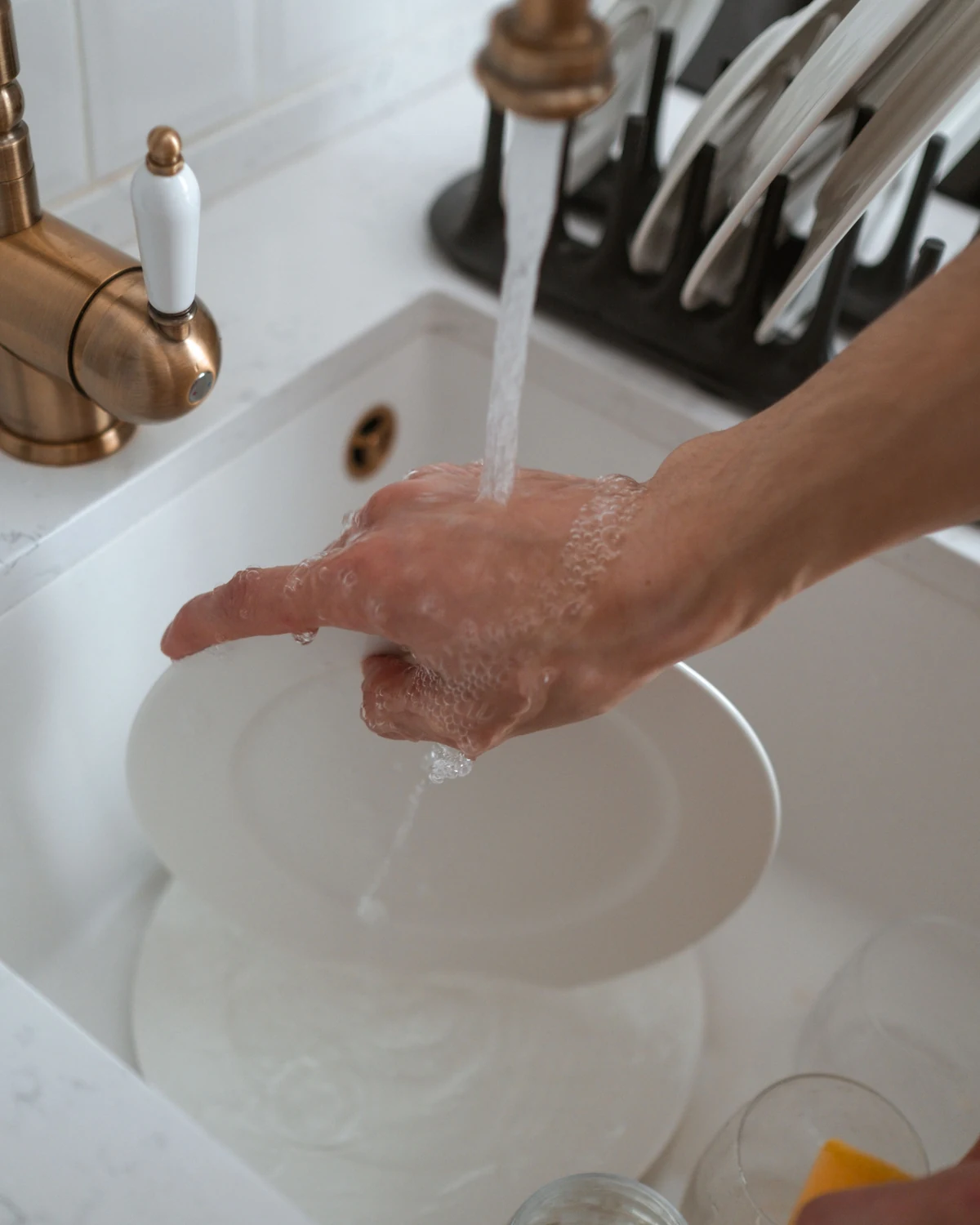
Detachment is not the finish line. Flow, wiping, fabric drainage and rinse volume decide whether dispersed soil actually leaves the surface or merely settles somewhere else when motion stops.
After soil detaches, it can still redeposit. Flowing water dilutes surfactant and transports droplets and particles away. Multiple rinses may remove residual cleaner more effectively than a static soak.
Anti-redeposition agents and charge effects help keep particles suspended. Fabric fibers, skin, ceramics and steel present different surfaces. A product designed for laundry may leave unacceptable residue on dishes; dishwasher detergent differs from hand dish liquid in foam and alkalinity.
Use the product labeled for the task and follow dosage and rinse guidance. More surfactant can mean harder rinsing, residue, cost and aquatic release—not automatically better cleaning.
Foam measures trapped air, not removed grease
Bubbles require surfactant films around air. A formulation can foam dramatically while doing little to a particular soil; another can clean well with low foam. Automatic dishwashers deliberately require controlled foam because abundant suds disrupt pumps and spray.
Foam can provide useful sensory coverage or increase contact time on vertical surfaces, but it is not a direct meter of micelles, disinfection or cleanliness. Hard water can suppress traditional soap foam because calcium and magnesium form insoluble fatty-acid salts.
Marketing has trained people to associate lather with power. Product tests must instead specify soil, substrate, water hardness, temperature, mechanical action, concentration and endpoint.
Hard water can remove the soap from the job
Calcium and magnesium ions react with fatty-acid soap anions to form poorly soluble salts—soap scum. That consumes surfactant and deposits residue. Synthetic detergents were developed partly to tolerate hard water better.
Builders can bind hardness ions, maintain alkalinity and disperse soil. Phosphate builders once transformed laundry performance but contributed to nutrient pollution when wastewater treatment and use patterns allowed phosphorus to reach lakes. Regulations and formulations changed in many regions.
The history of detergent is thus both chemical and environmental: a molecule solving one interface can create a watershed problem downstream.
Handwashing removes; it does not promise sterilization
Plain soap and water reduce microbes by wetting skin, loosening oils and particles, and carrying material away during rubbing and rinsing. Surfactants can also disrupt lipid envelopes of some viruses, but susceptibility varies and removal remains central.
FDA states that consumer antibacterial washes have not been shown superior to plain soap and water for preventing illness under the relevant evidence standard. Hand sanitizer is a different product and is less effective on visibly dirty or greasy hands.
Cleaning, sanitizing, disinfecting and sterilizing are not synonyms. A handwashing article must follow public-health guidance for time and technique rather than infer medical efficacy from molecular cartoons.
Soap can protect an interface and irritate another
Skin’s barrier contains lipids and proteins that repeated surfactant exposure can disrupt. Product pH, surfactant type, concentration, fragrance and contact time influence irritation. “Natural” does not guarantee mild or nonallergenic.
Gloves and workplace controls depend on chemicals and task. Never recommend homemade strong-alkali soap preparation here; sodium or potassium hydroxide can cause severe burns. Finished consumer soap is not equivalent to its manufacturing ingredients.
Environmental fate varies. Some surfactants biodegrade readily under particular treatment conditions; others or their metabolites persist or harm aquatic organisms at sufficient exposure. Dose, treatment and formulation matter more than “chemical versus natural.”
Concentration has an optimum, not an unlimited ladder
Below a useful concentration, interfaces may remain partly uncovered and detached oil can coalesce. Increasing surfactant can improve wetting and dispersion. Beyond the formulation’s useful range, additional product may offer little cleaning, increase viscosity or foam, leave residue and demand more rinse water.
Dilution also changes preservatives, pH and enzyme stability. Refilling a bottle with an improvised water mixture can create microbial or dosing problems. Product labels encode formulation testing; a molecular explanation does not replace them.
Temperature moves the optimum. Some nonionic surfactants become less water-soluble as temperature rises and can reach a cloud point. Ionic surfactants respond to salt and counterions. Cold can slow dissolution or thicken formulations. “Hotter activates soap” is not a universal chemical law.
Laundry adds a porous moving substrate
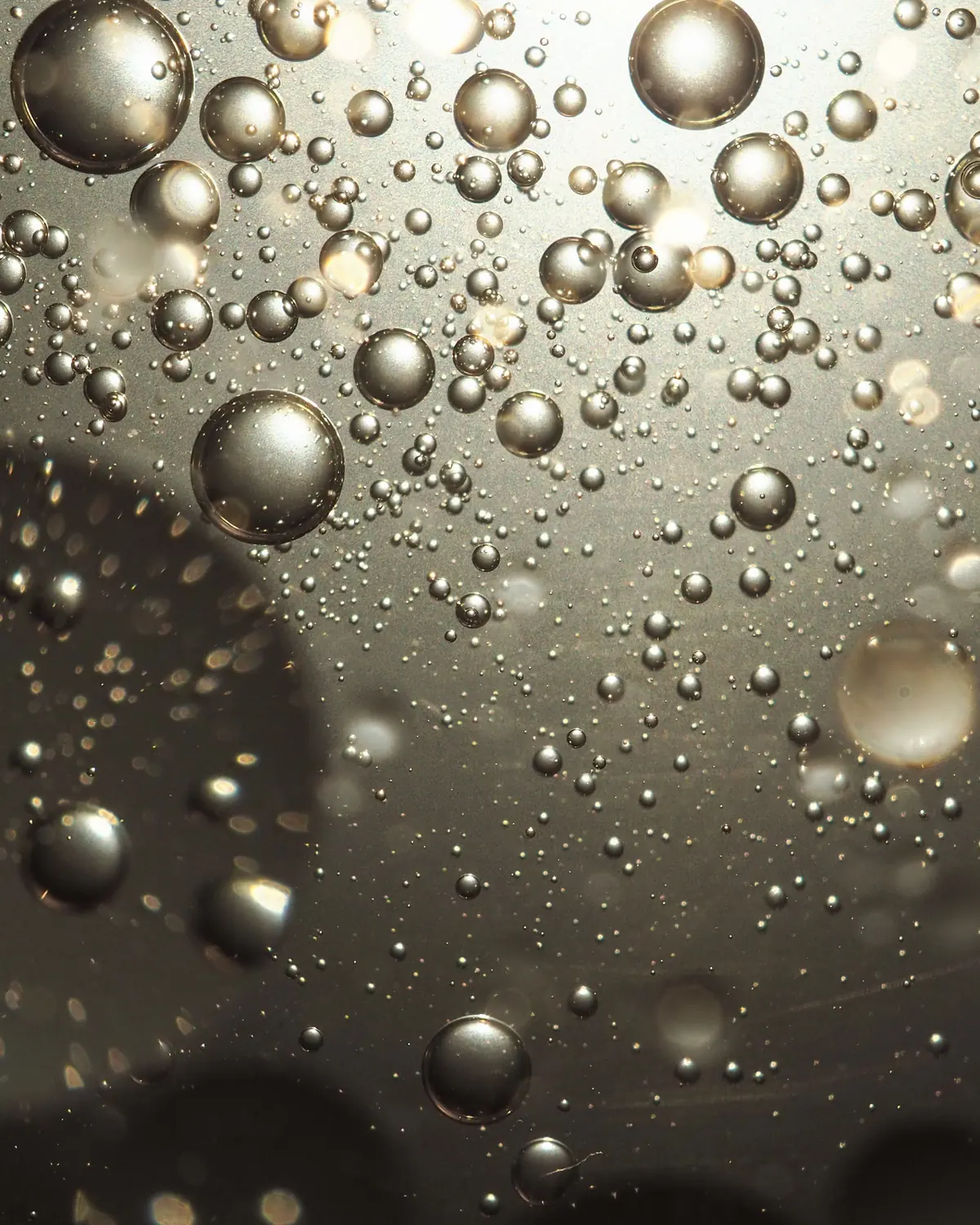
Fabric holds soil between fibers and within yarns. The wash bath must wet those structures, detach particulate and oily soil, prevent redeposition and then leave during drainage and rinsing. Mechanical tumbling bends fibers and renews liquid contact.
Cotton, wool, polyester and elastane differ in surface chemistry and damage tolerance. Oily soil has greater affinity for hydrophobic synthetic fibers; protein fibers may be harmed by high alkalinity or enzymes aimed at proteins. Garment labels and detergent instructions control.
Optical brighteners do not remove soil; they absorb ultraviolet and emit blue light, changing appearance. Fragrance can signal “clean” while residue remains. Whiteness, odor and hygienic reduction are separate endpoints.
Dishwashing uses alkalinity, enzymes and jets as a coordinated machine
Automatic dishwasher detergent is designed for recirculating hot water and forceful sprays. Excess foam cushions pump action and causes leaks, so hand dish liquid is unsuitable. Builders manage hardness; enzymes target starch and protein; alkalinity assists soil removal; rinse aids change drying and spotting.
Glass corrosion, metal attack and decoration damage constrain chemistry. A formula excellent for baked starch may etch delicate glass over repeated cycles. “Dishwasher safe” is a material and decoration claim, not merely whether an object fits.
The machine’s filters and drain complete the export. A surfactant that loosens soil but leaves it circulating onto dishes has not completed cleaning.
Emulsification is not the same as chemical destruction
After washing, oil molecules usually remain oil molecules dispersed in wastewater. Some fats can hydrolyze under sufficiently alkaline conditions, and lipase enzymes can cleave triglycerides, but ordinary surfactant action does not annihilate grease.
Wastewater treatment must then separate or biodegrade the organic load. Fats, oils and grease poured down drains can cool, accumulate and combine with other materials into blockages. Cleaning a pan successfully can still move a problem downstream if bulk oil is not disposed of according to local guidance.
This is the material-accounting complement to the micelle story: the rinse changes location and form before treatment changes chemistry.
Municipal advice commonly asks households to wipe or collect bulk cooking fat rather than wash it into plumbing. Requirements vary from one place to another, so check your own water utility’s guidance. Understanding how soap lifts grease tells you nothing about where that grease should end up.
A human thread: synthetic detergent solved a wartime and hard-water constraint
Soapmaking is ancient across multiple societies, with recipes and uses changing over centuries. Twentieth-century shortages of fats and the poor performance of soap in hard water accelerated synthetic surfactant development.
ACS’s history of Tide shows that its 1940s formulation paired surfactant with builders rather than relying on one magic molecule. Teams tested ratios, soil removal and laundering conditions. The breakthrough was systems engineering at the molecular scale: control the interface, hardness ions, suspension and rinse together.
That history also reveals why a modern ingredient list is long. Foam regulator, enzyme, builder, fragrance and preservative solve different problems and create different safety or environmental reviews.
A safe observation: compare water’s behavior, not homemade chemistry
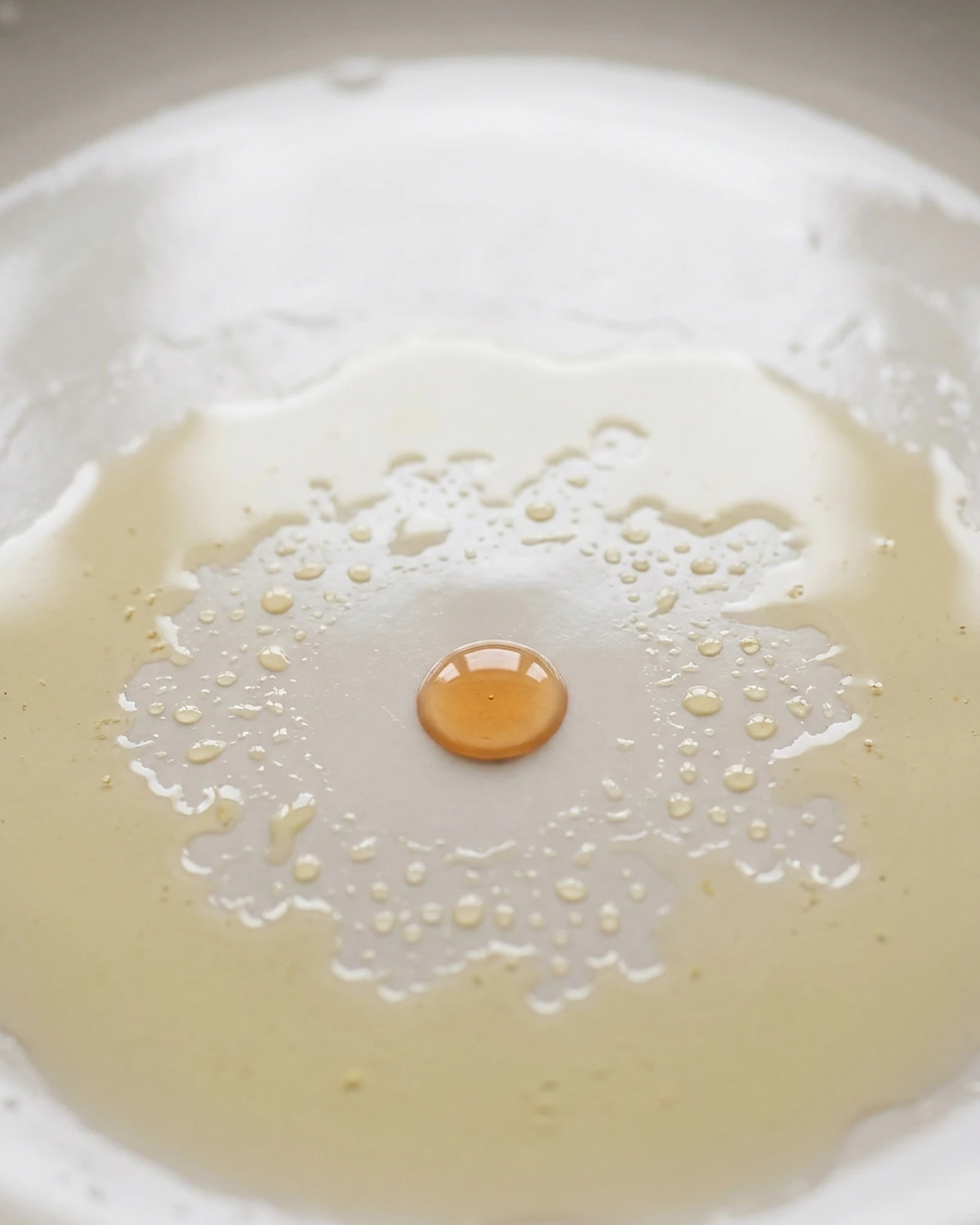
On two identical washable plates, place one drop of cooking oil. Rinse one with water only and wash the other using a tiny amount of labeled hand-dish detergent according to instructions, keeping splashes away from eyes and food. Observe spreading, droplet breakup and rinsing.
Do not mix cleaners, heat solutions, taste residues or use unknown chemicals. The observation cannot compare antimicrobial performance and does not establish a safe dose beyond the label.
For deeper evidence, photograph droplet size against a scale or compare manufacturer-standard soil-removal tests. Foam height alone is not an endpoint.
Cleaning is successful only when the soil leaves
Surfactant reaches the oily boundary and reduces the cost of expanding it. Mechanical action divides the film. Amphiphilic molecules occupy the new surfaces, keeping droplets dispersed and helping water wet the solid underneath. Aggregates can solubilize some material. The rinse carries the mobile mixture away.
Hardness ions can steal traditional soap. Excess product can remain as residue. Some soils need enzymes or solvents. Some microbes are reduced by removal rather than killed. Every step depends on formulation and use.
Soap works not by forcing oil to become water, but by building a temporary diplomatic zone between them—and then ensuring both sides leave on the same current.
Frequently asked questions
Is soap the same as detergent?
Chemically, traditional soap is a fatty-acid salt. Synthetic detergents use other surfactants, though everyday language often calls both soap.
Do micelles form around every grease molecule?
No. Cleaning includes wetting, emulsion droplets, particles and dynamic aggregates. Micelles are one pathway, especially above the relevant concentration range.
Does more foam mean more cleaning?
No. Foam measures stabilized air interfaces. Cleaning depends on soil, surfactant, mechanics, water and formulation.
Why does hard water make soap scum?
Calcium and magnesium form poorly soluble salts with fatty-acid soap, consuming surfactant and depositing residue.
Does plain soap kill germs?
It can disrupt some microbes, but handwashing’s main public-health value includes loosening and rinsing contamination away. It is not sterilization.
Why is sanitizer weaker on greasy hands?
Soil can shield organisms and prevent alcohol contact; sanitizer also does not physically rinse grease and chemicals away.
Is warm water required to remove grease?
Temperature changes viscosity and surfactant behavior, but safe handwashing and product guidance matter. Hot water can burn and is not a universal cleaning requirement.
Is homemade soap safer because it is natural?
No. Strong alkali used in manufacture is hazardous, and finished products can irritate or cause allergy. “Natural” is not a safety test.
Sources & further reading
This explainer was prepared through desk research using the sources below; established findings are distinguished from open questions in the text. See our editorial methodology.
- American Chemical Society, Development of Tide Synthetic Detergent — surfactant architecture, builders and formulation history.
- American Chemical Society, Celebrating Chemistry: How Soap Works — fatty-acid salts and hard-water scum.
- IUPAC Gold Book, Micelle — terminology and aggregate boundary.
- IUPAC Gold Book, Critical Micelle Concentration — concentration definition.
- FDA, Skip the Antibacterial Soap; Use Plain Soap and Water — consumer antiseptic evidence boundary.
- FDA, If Soap and Water Are Not Available, Hand Sanitizers May Be a Good Alternative — greasy/dirty-hand limitation.
- CDC, About Hand Hygiene in Schools and Early Care — washing/rinsing public-health context.
- U.S. EPA Safer Choice, Safer Chemical Ingredients List — hazard-screening context for surfactants and other formulation ingredients; not a universal product-safety claim.
- Rosen & Kunjappu, Surfactants and Interfacial Phenomena — specialist reference; exact claims require chapter/page review before publication.
- IUPAC Gold Book, Surfactant — adsorption at interfaces and lowering of surface/interfacial tension.
- Ananthapadmanabhan et al. (2021), Role of pH in skin cleansing — formulation-dependent cleanser mildness and the limits of pH-only claims.
Spotted an error? We correct verified mistakes promptly — email contact@flashscience.org.
Continue exploring